

One Month to Go: Glasgow 2026 marks the start of a new era for Commonwealth Sport
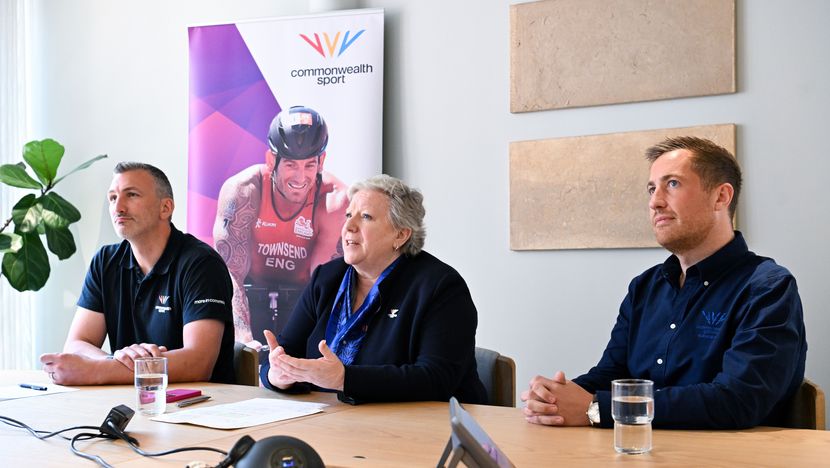
With one month to go until the Opening Ceremony on 23 July, Commonwealth Sport and Glasgow 2026 hosted a virtual media briefing to preview a landmark edition of the Commonwealth Games and outline how Glasgow 2026 marks the start of a new era for the Commonwealth Sport Movement.
Commonwealth Sport Chief Executive Katie Sadleir and Glasgow 2026 Chief Executive Phil Batty were joined by Team England middle-distance runner Georgia Hunter Bell, Welsh sprint legend Iwan Thomas MBE, double Olympic champion and Commonwealth gold medallist Jo Rowsell MBE, and Scottish Para athlete Melanie Woods to discuss the significance of Glasgow 2026 and the role the Games will play in the future of the Commonwealth Sport Movement.
A new era for the Commonwealth Sport Movement
Katie Sadleir described Glasgow 2026 as a defining moment for the Movement, highlighting the Games as the first to be delivered under the new Games model.
"At a time when there are turbulent times around the world, a sporting event gives the opportunity to bring people together," she said.
Looking beyond Glasgow, Sadleir pointed to a strong future for Commonwealth Sport, with the Malta 2027 Commonwealth Youth Games and the Centenary Commonwealth Games in Amdavad, India, in 2030 already on the horizon.
A Games built for the future
Phil Batty spoke about Glasgow's approach to delivering a sustainable Games without compromising the athlete or spectator experience.
"Sustainability doesn't have to be a compromise," he said. "Sustainability can be a core purpose that's driving our event."
Glasgow 2026 will welcome more than 3,000 athletes from 74 nations and territories, stage the largest integrated Para sport programme in Commonwealth Games history and transform the city with an eight-mile Games corridor connecting venues and communities.
Delivered with a budget of £160 million, the Games have been designed around Glasgow's existing world-class venues and major event expertise.
"It's not always bigger that's better," Batty said. "It's braver that's better."
With strong ticket sales already recorded, including sold-out Track Cycling sessions, Batty said Glasgow was ready to build on the city's passion for sport and welcome the Commonwealth back to Scotland.
Where champions compete and future stars emerge
The athlete panel reflected on what makes the Commonwealth Games unique.
For Melanie Woods, competing at a home Commonwealth Games is "a once-in-a-lifetime opportunity." She also highlighted the importance of the integrated Para sport programme.
"The platform, the visibility it gives Para sport is so special," she said. "It shows the breadth and depth of Para athletics right now."
Fresh from winning the British title, Georgia Hunter Bell described the Commonwealth Games as "a bucket list championship" and said competing in Glasgow would feel like a home Games despite representing Team England.
Jo Rowsell MBE reflected on winning Commonwealth gold at the Sir Chris Hoy Velodrome in 2014, describing it as "probably my best ever individual performance". She also highlighted teammate Kiera Oliva's remarkable return to elite competition after becoming a mother to three children.
For Iwan Thomas MBE, who won Commonwealth gold for Wales in 1998, representing his home nation remains one of the defining moments of his career.
"To this day, it's still probably one of my proudest moments, and to do it in a Welsh vest was really special," he said.
When asked to sum up the Commonwealth Games in a single word, Thomas offered "Welsh pride"; Rowsell, "friendly Games"; Woods, the unique "integration" of Para and able-bodied sport; and Hunter Bell, simply, "opportunity."
With just one month remaining until the Opening Ceremony, preparations continue at pace for Glasgow 2026. As the Commonwealth Sport Movement enters a new era, the Games promise 11 days of world-class sport, unforgettable stories and the unique power of bringing 74 nations and territories together through friendly competition.
